1
2
3
4
5
6
The Impossible Triangle (Opus 1 / tribar)
This is the best place to begin, because it is the work most closely associated with Reutersvärd and the one that first established his lifelong fascination with impossible form. Created in 1934, the triangle appears at first to be the simplest of geometric figures, something almost childlike in its clarity. Yet the longer you look, the stranger it becomes. Each segment seems perfectly plausible, but when the eye follows the figure all the way around, the whole refuses to settle into a possible object. It is a shape that promises coherence and then quietly withdraws it.
The Impossible Staircase
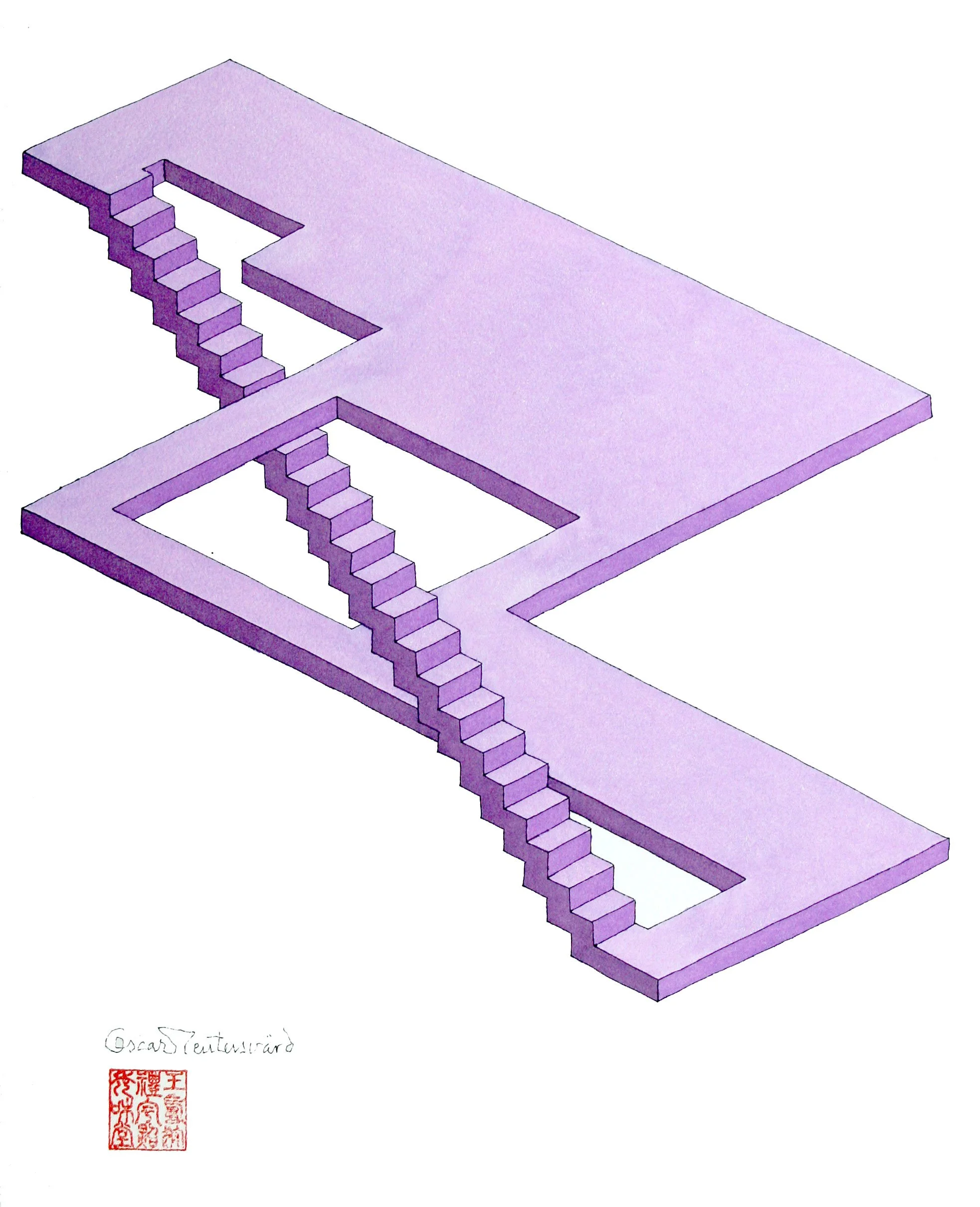
Reutersvärd’s impossible staircase, devised in 1937, takes the paradox of the triangle and gives it motion. Here contradiction is no longer static but dynamic: the image suggests ascent, effort, and progress, yet the movement circles back on itself. One could keep climbing forever and never arrive anywhere. That is part of what makes the staircase so evocative. It is not just an optical puzzle but a reflection on repetition, striving, and the strange possibility of movement without transcendence.
The Impossible Fork
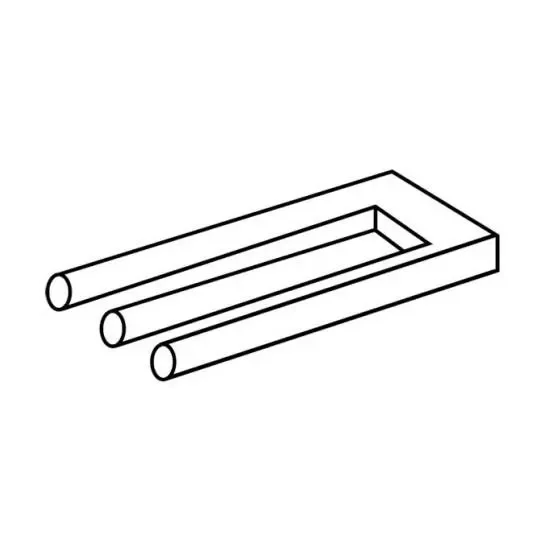
The fork or trident-type figure introduces a different kind of disorientation. Unlike the triangle or staircase, which can initially feel architecturally stable, this form begins to wobble almost at once. The front of the image presents one logic, the back another, and the mind cannot quite bridge the two. It is as though the object splits between incompatible realities. That is what gives the impossible fork its peculiar force: it does not simply hide its contradiction in the whole, but lets the contradiction appear in the very passage from one end of the image to the other. Reutersvärd developed the concept leading to this kind of figure in the 1930s alongside his early impossible objects.
Interlocking Beams
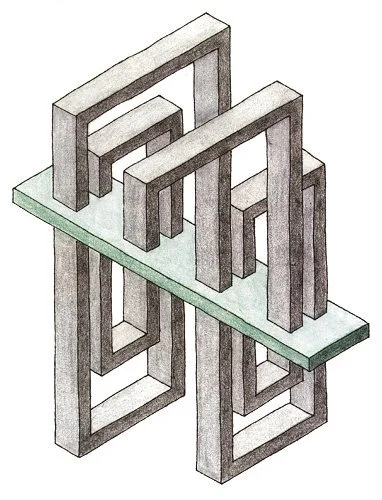
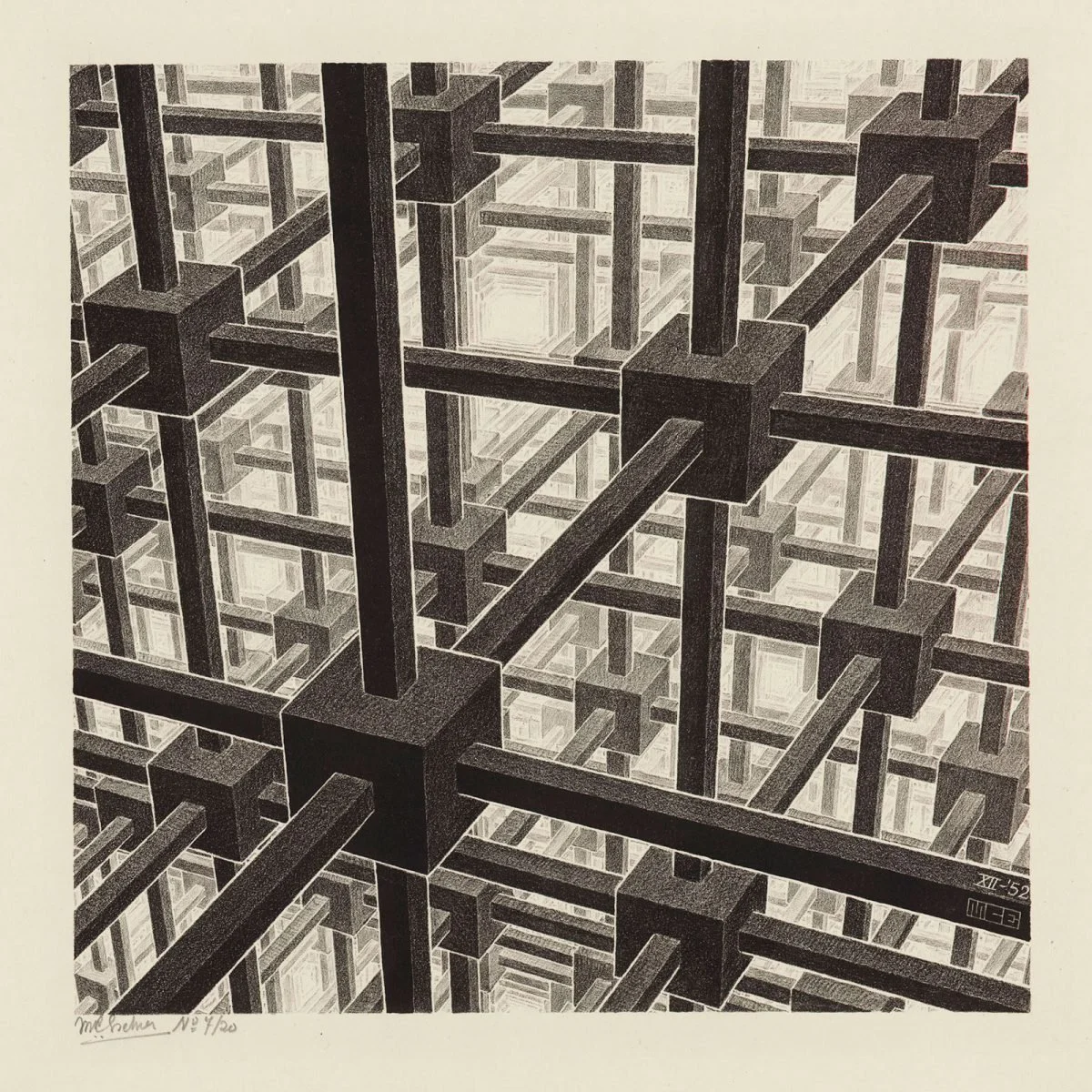
In Reutersvärd’s interlocking beam constructions, a number of bars or crosspieces seem to pass through one another in ways that appear orderly and exact, yet cannot be reconstructed in actual three-dimensional space. These works are especially striking because they look so disciplined. Nothing in them appears chaotic. The lines are clean, the arrangement is measured, and each element seems to obey a clear structure. And yet the overall relation between the beams is impossible. These images make contradiction feel less like disorder and more like an invisible fracture hidden within order itself.
Cubic Space Division
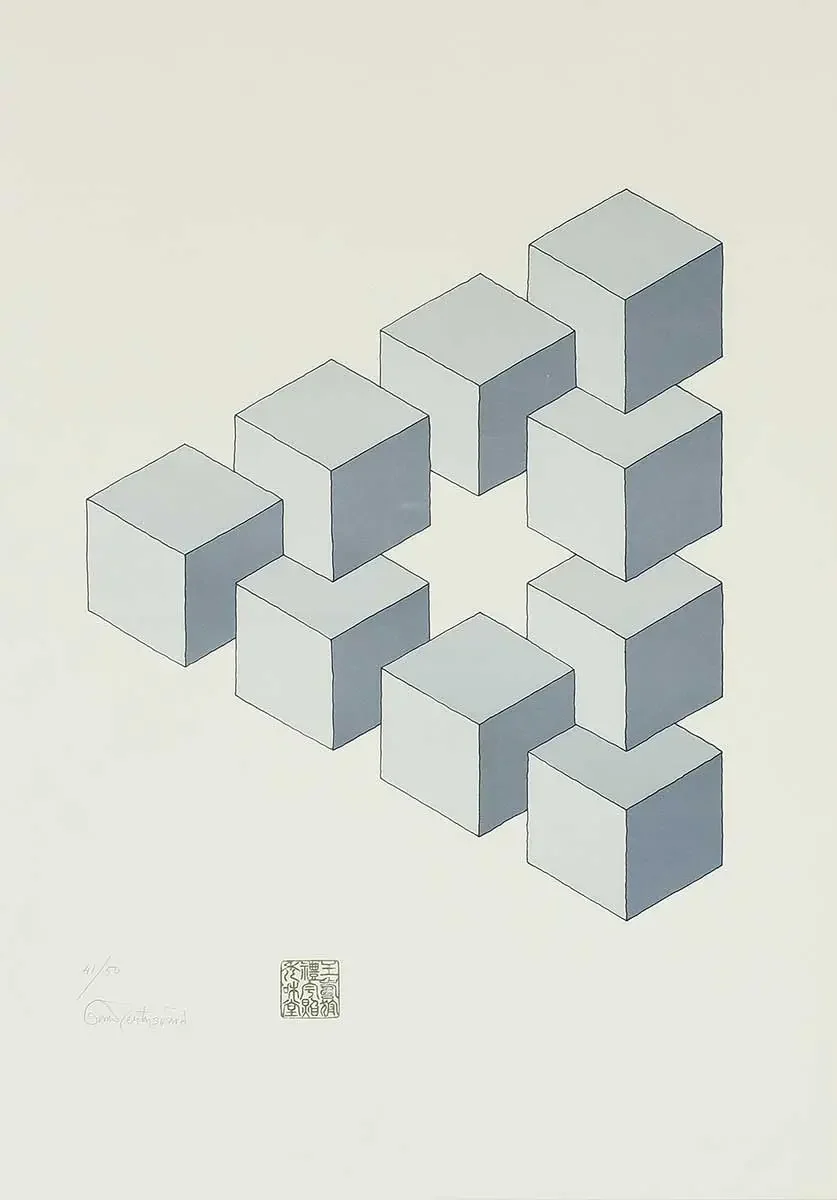
Reutersvärd often built his impossible worlds out of cubes, and that matters. The cube is one of the most ordinary and reliable units of spatial thought, which makes it the ideal material for paradox. In these cubic space-division works, he takes the most familiar visual building block and arranges it so that ordinary perspective begins to betray itself. What should stabilize the image instead destabilizes it. The result is powerful because the contradiction does not arise from some bizarre fantasy form, but from the basic grammar of how we imagine solid objects inhabiting space.
Perspective Japonaise No. 418
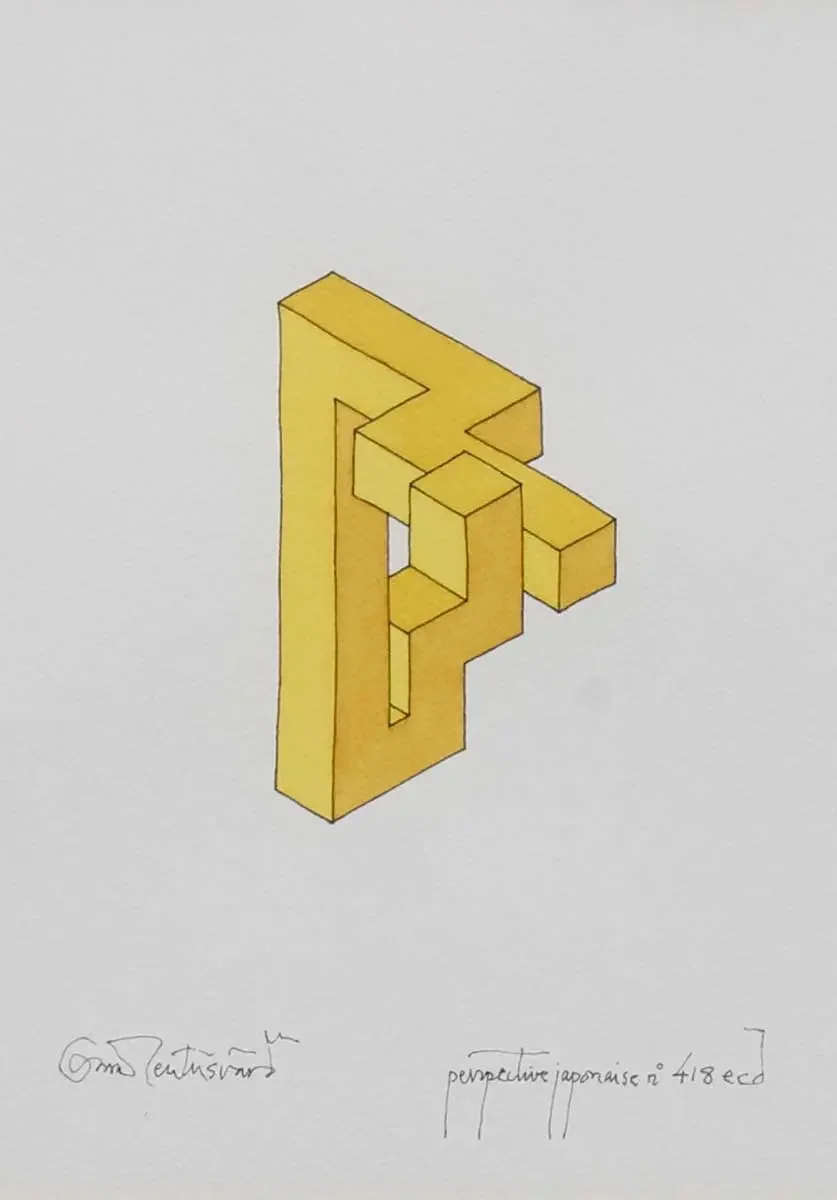
The Perspective Japonaise works show Reutersvärd moving beyond his most famous singular objects into more elaborate and meditative constructions. These pieces often feel more architectural, more expansive, and in some cases more elegant than the stark early impossibilities. They invite the eye to wander through a carefully ordered visual world, only gradually revealing that the world cannot hold together. If the triangle and staircase are like aphorisms, the Perspective Japonaiseworks are closer to visual meditations on contradiction. They show Reutersvärd not merely inventing puzzles, but developing a sustained aesthetic language of impossibility.