1
2
3
4
5
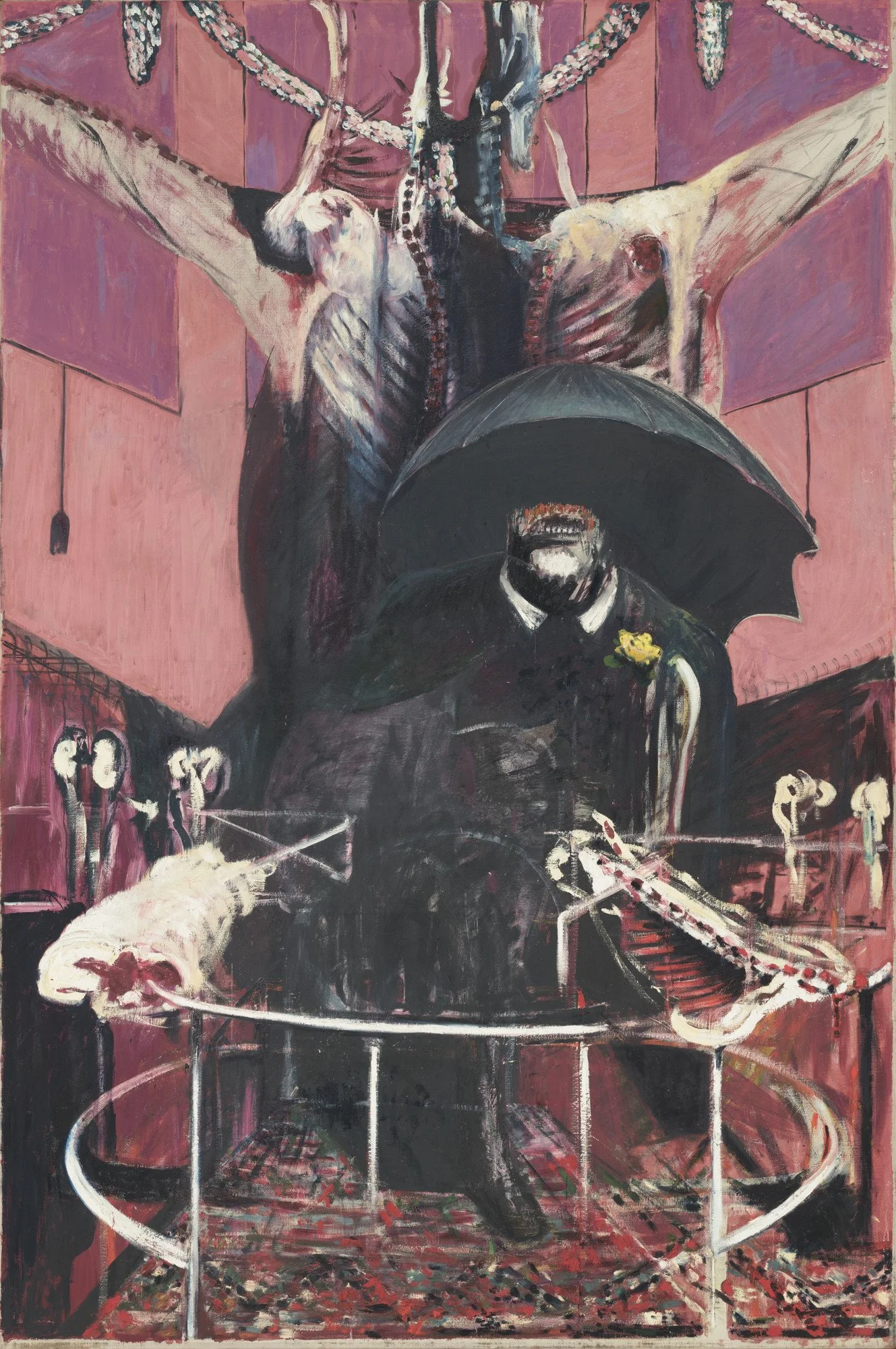
Painting (1946)
A suited figure stands beneath hanging carcasses, caught between authority and flesh. Power here offers no protection from violence; it merely persists alongside it. The scene refuses moral hierarchy. There is no higher order overseeing the brutality, no justification for why things are arranged this way. The world is indifferent, without harmony, absurd.
“People say that these things are horrible, but life is horrible.”
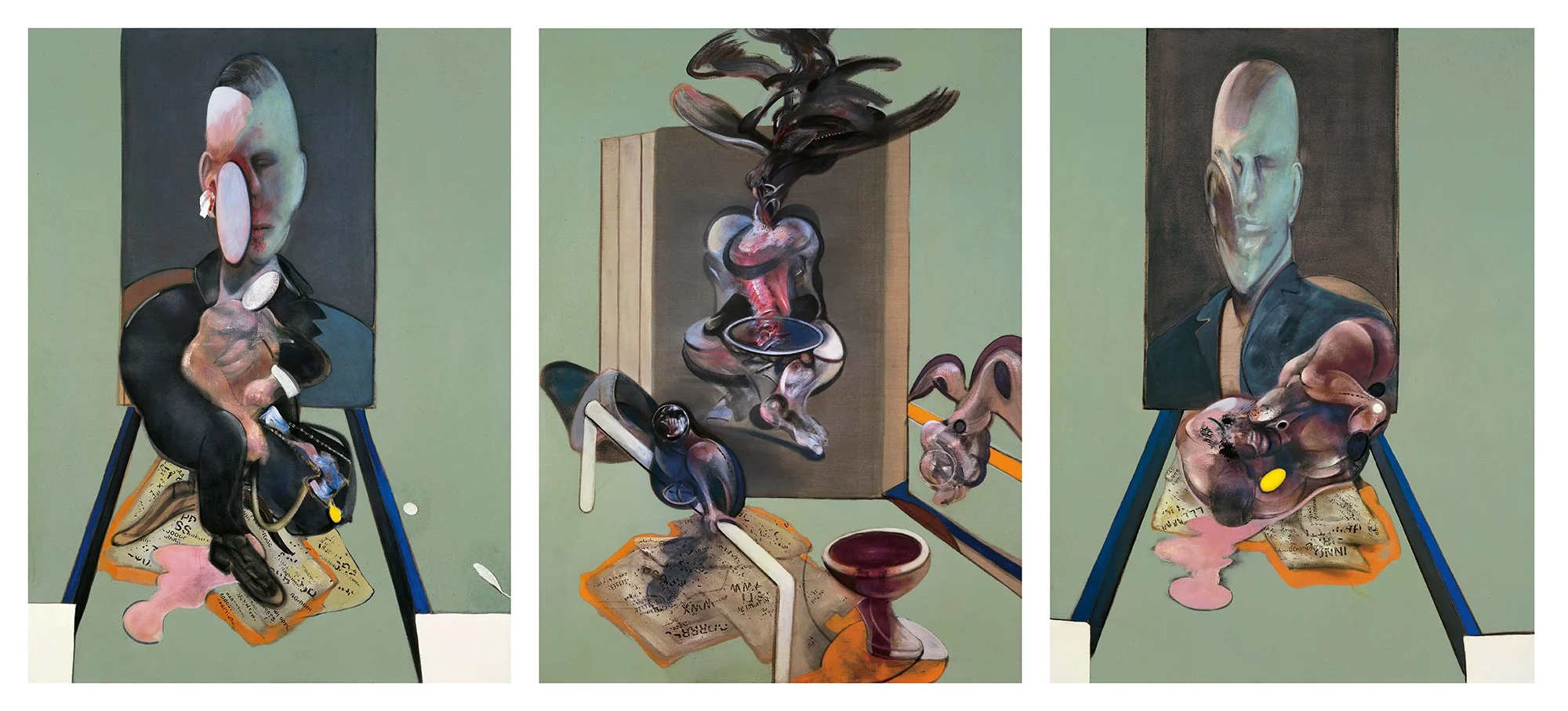
Triptych (1976)
Three isolated figures occupy separate spaces. There is no narrative linking them, no movement toward resolution. This is existence without trajectory. Life continuing after explanation has failed.
“Life has no meaning, but we give it meaning during our own existence.”
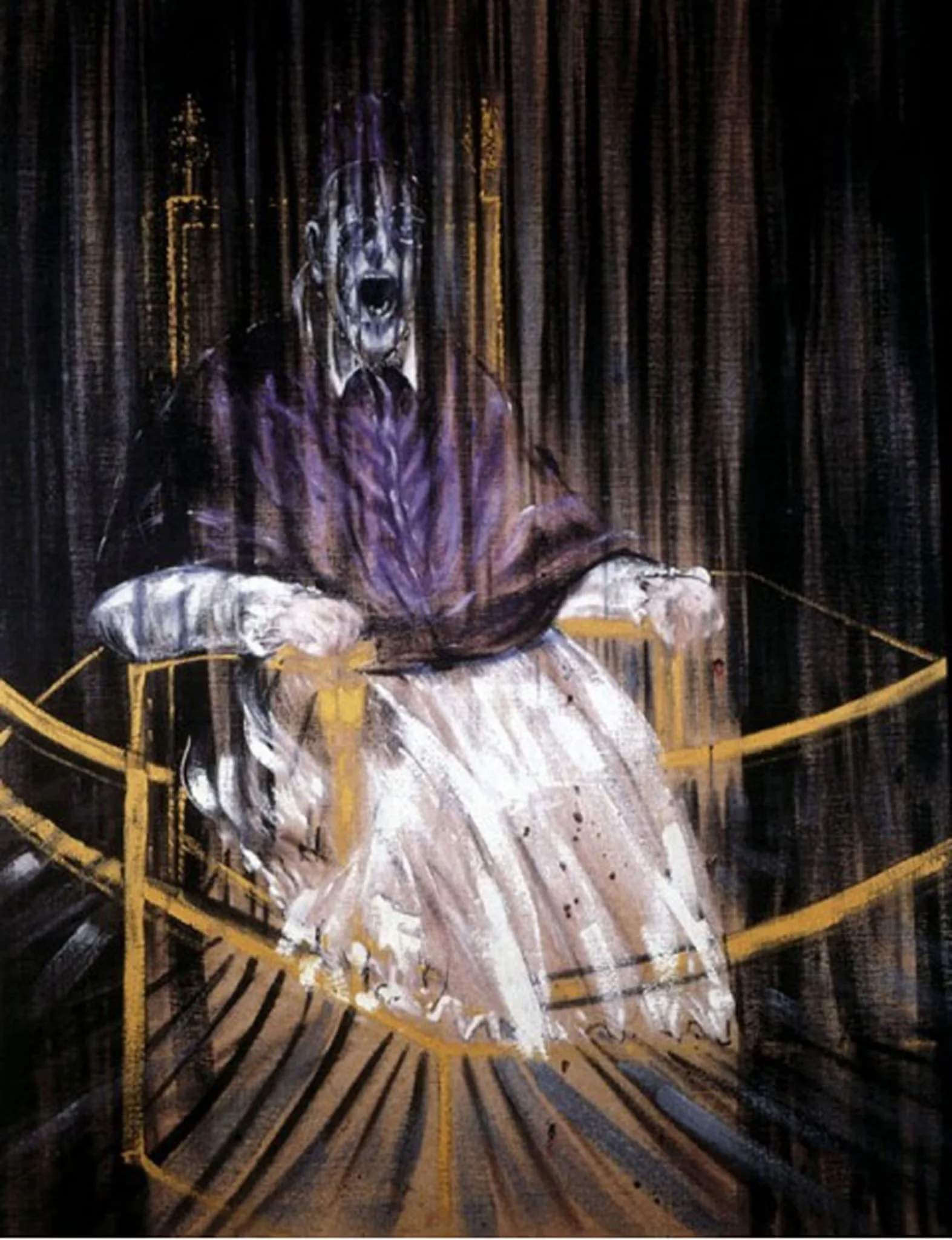
Study after Velázquez’s Portrait of Pope Innocent X (1953)
The Pope screams into the void. He remains enthroned, framed, and displayed, but stripped of transcendence. His authority is stripped of its metaphysical ground. Even the religious authority cannot escape the terror of being.
“The scream is a very beautiful thing. It’s a release.”
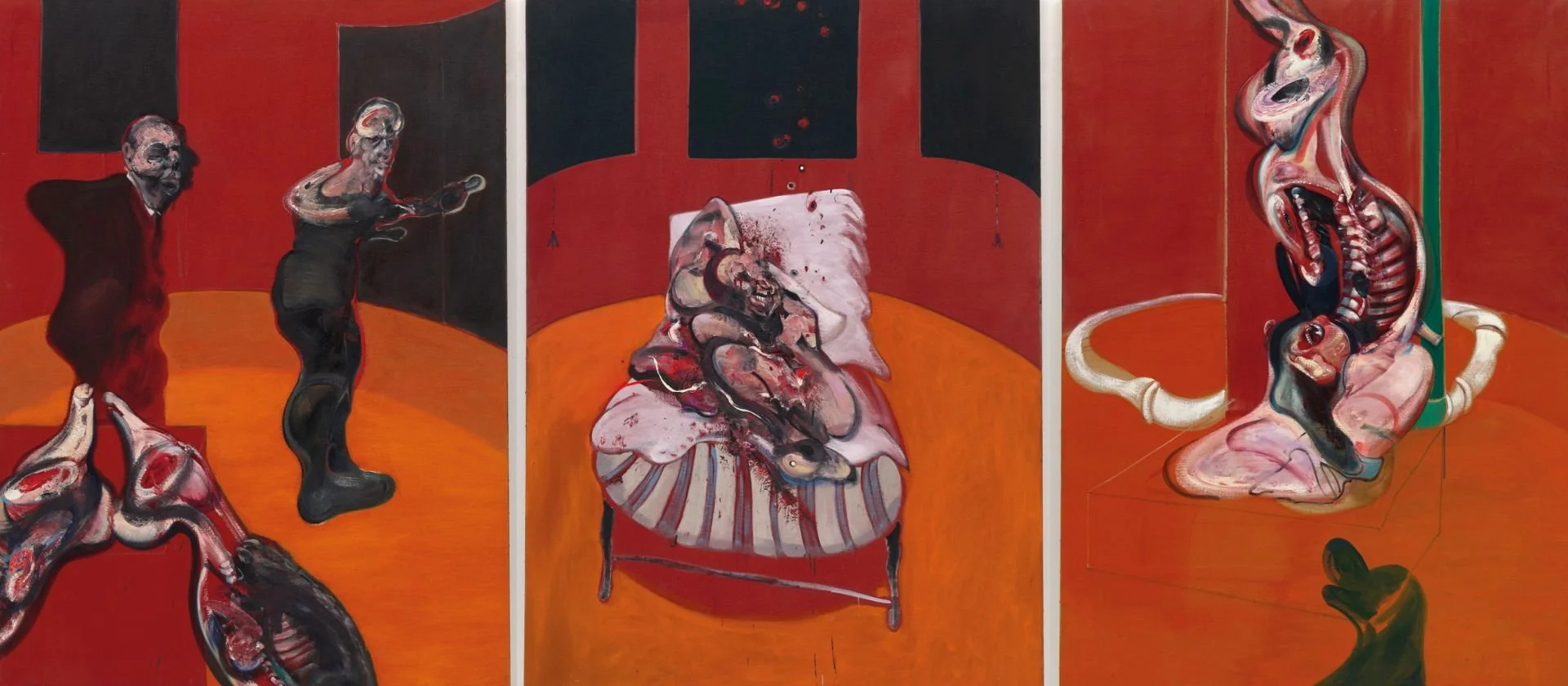
Three Studies for a Crucifixion (1962)
Bacon was fascinated by the crucifixion and explored it without its usual metaphysical meaning. Presenting the horror of the event in a raw way. Bodies are butchered rather than sacrificed; suffering is intensified rather than redeemed. The cross no longer points beyond itself, but functions as a structure on which pain is exposed. Bacon accepts Christianity’s central image and quietly removes its promise.
“I’ve always been very moved by the image of the Crucifixion… it’s a magnificent armature on which you can hang all types of feeling.”
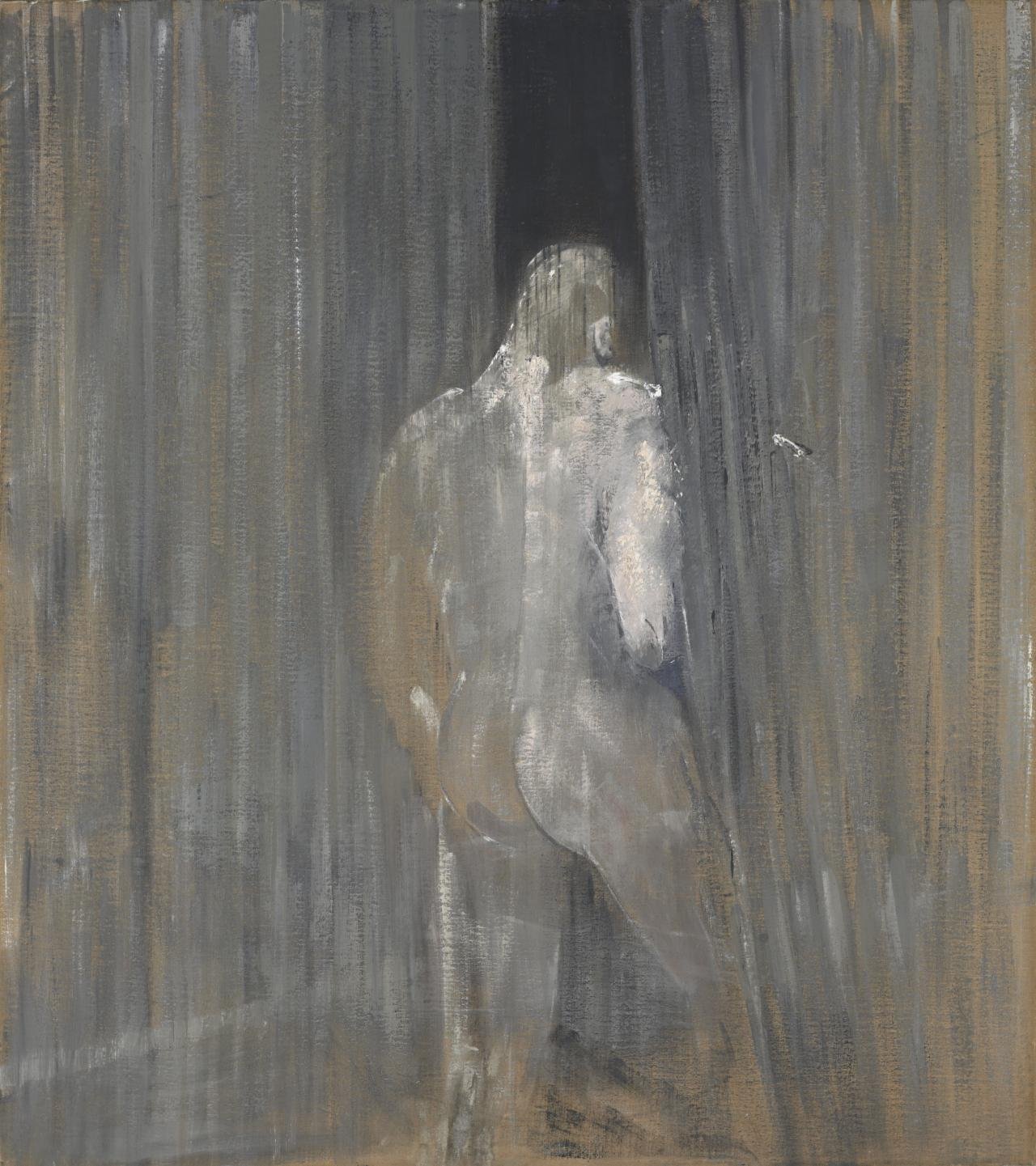
Study of the Human Body (late works)
Here, Bacon strips away symbolism almost entirely. What remains is fragile, finite flesh. There is no accusation and no consolation; only the fact of embodiment. The body is not a sign of something else; it is simply what is there.
“We are born and we die, and that’s all.”